
To be honest, true Italian food can only be found in Italy. The only way to experience the deliciousness of our authentic recipes is to come to Italy and spend a vacation dedicated to authentic Italian food experiences. It will be unforgettable. The Italian food you find abroad is merely a copy, often very different from the original. The reason for this difference lies in the basic ingredients used in authentic recipes. In Italy, the unique Mediterranean climate and the country’s geography (small but diverse) give rise to ingredients (flour, cheese, meat, fish, olive oil) that cannot be found abroad. Added to this are specific seasonal ingredients, such as certain vegetables, which are found only in certain regions of Italy (Treviso radicchio, Roman artichokes, Sicilian datterini tomatoes). Reading a cookbook is not enough to understand what life is like in Italy or the value of a culture tied to food and the Mediterranean diet. Furthermore, the quality of the food in Italy is exceptionally high due to strict regulations designed to protect food and its traditional production methods. The entire Italian lifestyle cannot be replicated abroad.
The Accademia di Cucina Italiana has always been committed to promoting Italian culture and traditions related to food and the unique Italian way of life. Its founder, Gioia Tiozzo, an Italian cooking instructor, will be your guide in helping you to discover everything Italy has to offer.
What “authentic” Really Means in Italian Cuisine
Italy is a small country with an incredible diversity of climate, terrain, and culinary traditions. Each region (20 in total) has its own specific and unique traditional meals and dishes based on distinctive products from the countryside or from the sea. Don’t forget that each season has its own produce in all different regions. This means that Italy boasts an impressive array of ingredients used to create recipes—some dating back centuries—that are unique in the world.
However, there is another important element missing when it comes to understanding Italy’s complexity. It’s not just about the twenty different regions. You have to keep in mind that every city or small town within a region has its own distinct and unique dishes.
Northern cuisine (based on rice) is very different from southern cuisine (based on pasta). But the cuisine of the northeast—based on fish—differs from that of the northwest, which is based on red meat. The cuisine of central Italy, on the other hand, is distinguished by iconic recipes known throughout the world (“carbonara”, “cacio e pepe”, “carciofi alla giudia”, “gnocchi alla romana”). In Naples, as everyone knows, you’ll find the best pizza in the world.
To truly understand authentic Italian cuisine, you need to gain a better understanding of the geography and diversity of the country and have the patience to try many different recipes that vary based on the ingredients used.
This diversity has very ancient roots, dating back to before 1861, when Italy was a collection of small, independent states that were fiercely protective of their distinctiveness and used dialect, traditions, and even food to preserve their uniqueness. Although Italy is now a unified nation, this regional diversity remains pronounced.
However, if I had to simplify the complexity of Italian classic and rustic cuisine, I’d say there’s one fundamental rule that everyone always follows: when starting with fresh, seasonal ingredients, flavor must always remain clearly defined in the final dish and never be masked by sauces, toppings, or dressings. This explains why so many iconic Italian recipes are delicious precisely because of their simplicity and the few ingredients they use.
Gioia Tiozzo, a psychologist specialising in nutrition, has a clear philosophy in the kitchen: you can prepare delicious recipes even with just two ingredients and only 30 minutes to spare. You can use rice or pasta, meat or fish, or just vegetables for vegetarian recipes. Good food is never about spending money on expensive ingredients; rather, it’s a matter of cooking methods and quality ingredients.


Myths: Dishes You Think Are Italian (But Aren’t)
To avoid any unpleasant surprises upon your arrival in Italy, here’s a list of dishes that tourists usually consider part of Italian culinary tradition, but which don’t actually exist in Italy (or you’ll only find them in tourist restaurants not run by Italians). The dishes listed are, in reality, Italian-American recipes that are considered an affront to Italian culinary tradition in Italy. To confirm this, you should definitely ask someone who is Italian and knows our traditions well.
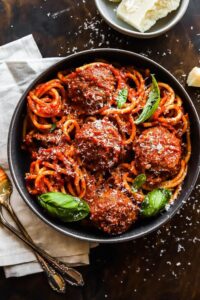
“Spaghetti with Meatballs”
“Fettuccine Alfredo”
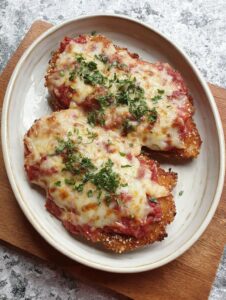
Chicken Parmigiana
Pepperoni pizza


The secret lies in regional diversity: a journey from north to south
Let’s dispel a myth: there is no such thing as “typical Italian food”; rather, there is regional Italian cuisine. Italy is a small country divided into 20 regions, each with its own distinctive traditional dishes based on ingredients specific to that region. The ingredients vary depending on the season. Recipes can also vary based on religious holidays within the same season. Christmas desserts are different from those served during Carnival (in February).
If you’re curious to try famous Italian recipes, you’ll first need to decide which regions of Italy interest you. Let me give you a few examples. “Risotto” is typical of Northern Italy: in Venice, you can try “seafood risotto” ( risotto pesce), while in Milan, I recommend “saffron risotto” ( risotto allo zafferano). In central Italy, and particularly in Lazio, “cacio e pepe pasta” is an iconic dish that you’ll rarely find on menus in the north. If you head south to Sicily, you’ll find “cannoli,” while in other southern regions, such as Puglia, you’ll find the dessert “pasticciotto.”
Every region has such a diverse culinary tradition that it’s impossible to give simple examples—entire books could be filled with them instead. Anyone who has visited northern Italy knows that there are traditional recipes found only in Venice but impossible to find in nearby cities (such as Verona or Milan). Examples of traditional recipes found only in Venice include “seafood risotto”, “spaghetti with clams”, “Carnival frittelle”, “tramezzini sandwiches”, and “sgroppino” (an alcoholic drink made with Prosecco and lemon sorbet).
The Golden Rule: Simplicity and Quality of Ingredients
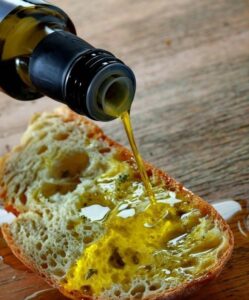
Authentic Italian cuisine celebrates the ingredients. In other words, the deliciousness of the dishes comes from simple, everyday ingredients of the highest quality. Some of the most common examples are: extra virgin olive oil, semolina flour, Parmesan cheese, and wine. Starting with these, without having to come up with complicated recipes, it’s possible to create dishes with an unmistakable and inimitable flavor. Let’s take another example: mozzarella. You can use it on pizza, but it’s also delicious on its own in a “caprese salad.” There’s no need to add anything else. To understand how Italian extra virgin olive oil is a crucial ingredient, you have to savor it on a slice of bruschetta-style bread. There really is no need for anything else. Another example could be coffee. Enjoying a cappuccino at an Italian café or a tiramisu is an example of how quality ingredients are the secret to every recipe.
How to Spot an Authentic Restaurant (and Avoid Tourist Traps)
Below, you’ll find a brief guide to help you choose where to eat during your culinary vacation in Italy. The guide was written by Gioia Tiozzo, a professional cooking instructor born and raised in Venice. You can trust her because she’s an expert on Italian food.
How to recognise an authentic Italian restaurant.
- The daily menu with prices must be displayed outside.
- The menu is limited, and there isn’t an endless list of dishes to choose from. The menu changes almost every day. This is because the restaurant uses whatever produce is available at the market that day.
- The restaurant offers local recipes made with typical local ingredients. You won’t find iconic Italian dishes.
- The menu features local wines typical of that region, but there’s also an extensive selection of Italian wines.
- The menu must include a selection of vegetarian dishes.
- These restaurants never have pizza on the menu (which is found only in pizzerias).
- Hours of operation are from 12:00 PM to 3:00 PM and from 7:00 PM to 10:30 PM.
- After the meal, we’re always offered a shot of amaro as a digestif.
How to Spot Restaurants That Are Tourist Traps
- Avoid restaurants that display “tourist menus” with stock photos of iconic Italian dishes.
- Avoid restaurants where waiters outside insist that you come in. This behaviour is considered very rude in Italy.
- Avoid restaurants with menus featuring endless lists of dishes. It’s unlikely that the ingredients are fresh; it’s very likely that the food is frozen.
- Avoid restaurants if the menu also includes pizza.
- Avoid restaurants if you can eat at any time of day—they’re open nonstop.
From Theory to Practice: Bring Authentic Italian Cuisine into Your Home
Now that you have a clearer understanding of Italian food, you need to embrace the idea that anyone can learn to cook real Italian recipes right in their own kitchen. All you have to do is choose the ingredients, pick a recipe, and get familiar with Italian cooking methods. After returning from a trip to Italy, you’ll have a clearer idea of which recipes you liked best. However, you’re missing the right cooking instructor to help you move from theory to practice. You can definitely trust in Gioia Tiozzo, a cooking instructor with 20 years of experience who offers classes in Venice and online.
Accademia di Cucina Italiana is the best way to turn your love of Italian food into a real skill.
Are you planning a trip to Venice? Don’t just taste authentic Italian cuisine—learn how to make it yourself. Join me for a truly unforgettable cooking class in the heart of the city.
Can’t make it to Venice? Bring the authenticity of Italian cuisine into your kitchen with my online cooking video courses.
Start today with AUTHENTIC ITALIAN DISHES or RISOTTO AND PASTA